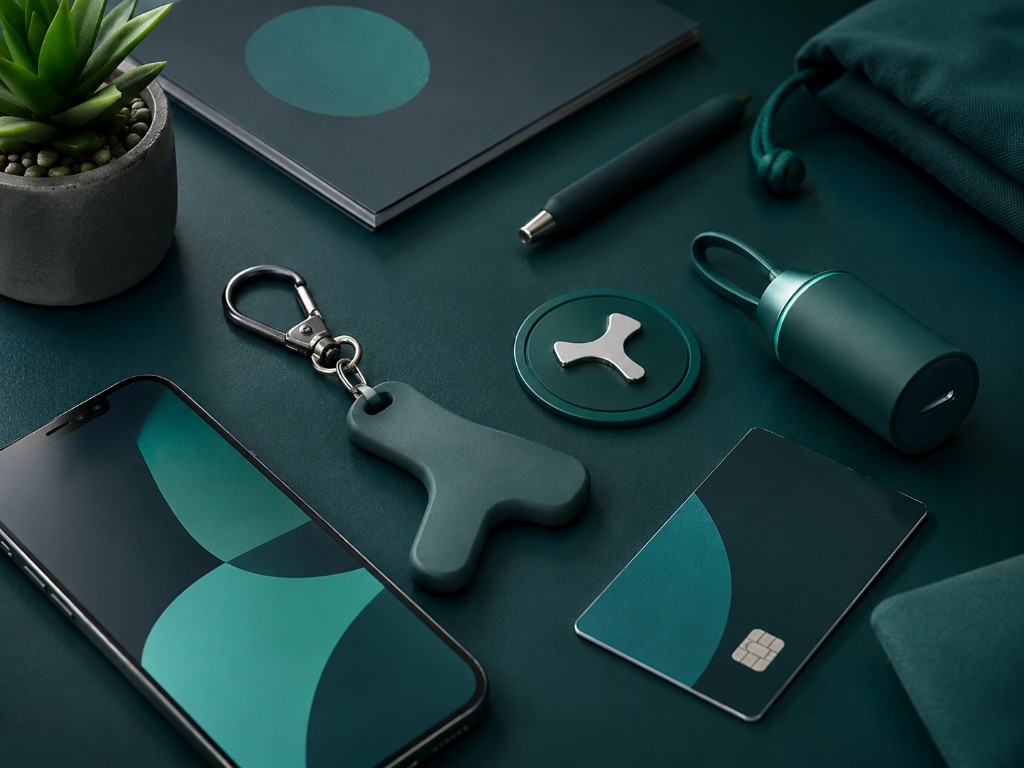
Marketing departments have long sought to release classic goodies. Pens, mugs, tote bags: everyone has already received them, sometimes several versions of the same model. The saturation is real, and with it the drop in memorization. The natural reflex is to look for “more original”. Except that originality, poorly thought out, produces the opposite effect: an incomprehensible or useless object ends up in the trash faster than a well-chosen standard goodie.
A successful original promotional item meets three simultaneous requirements: it surprises positively, it serves a purpose and it triggers a clear action. NFC connected objects bring a new dimension: originality no longer comes only from the shape of the object, but from the experience it opens up after scanning. This is often where differentiation becomes truly sustainable.
Why are classic promotional items no longer enough?
Classic goodies suffer from several cumulative problems: market saturation, poor differentiation, lack of interaction, perception of an object "seen everywhere", and almost total impossibility of measuring their effectiveness. At a trade show, receiving a fifteenth pen or an eighth tote bag doesn't make a mark. The object goes to the pile, then to the drawer, then to the trash can.
For a company, this saturation translates into a loss of marketing efficiency: same budget, same formats, but fewer returns. Originality therefore becomes a strategic question. It is not a question of seeking gratuitous extravagance, but of returning to the essential: what an object can do for the target and for the brand.
What is an original promotional item?
The originality of an advertising item can come from several dimensions. The shape (silhouette, size, ergonomics), the design (colors, illustrations, typography), the use (unexpected function), the personalization (contextual message, first name, personal element), the digital experience (unique journey after scanning) or even the interaction (game, challenge, reserved content).
A magnet can become original because it opens a monthly competition. A key ring can surprise you because it triggers a personalized sponsorship. A card can score because it opens a named video message. In all these cases, it is not the material or the form that creates originality, but the associated experience. And this is precisely what Timelapse-3D allows you to add to any physical media.
10 ideas for original promotional items
Here are ten concrete ideas, all adaptable to a B2B, local or retail strategy. For each, the idea is not just the form: it is the experience that it opens up.
Les badges et cartes NFC démarrent à 250 unités (from €2.40 HT à ce palier). Pour les supports textile (tote bag, mug, gourde) et les étiquettes, le palier d’entrée est 1,000 units. Au-delà de 10,000 units, tous les supports passent en devis sur mesure avec une remise dégressive.
| Support | 500 units | 1,000 units | 5,000 units | 10,000 units |
|---|---|---|---|---|
| Custom NFC keyring | from €2.40 HT | from €1.50 HT | from €1.15 HT | On request |
| Custom NFC magnet | from €2.40 HT | from €1.50 HT | from €1.15 HT | On request |
| Stylo NFC publicitaire | from €2.40 HT | from €1.50 HT | from €1.15 HT | On request |
| Badge & carte NFC (mini. 250 u.) | — | from €1.20 HT | from €0.90 HT | On request |
| Étiquette / sticker NFC | — | from €0.90 HT | dès 0,65 $ HT | On request |
| Support comptoir 3D imprimé | dès 4,90 $ HT | dès 4,90 $ HT | On request | On request |
| Tote bag personnalisé | — | dès 1,80 $ HT | On request | On request |
| Mug céramique personnalisé | — | from €2.40 HT | On request | On request |
| Gourde inox personnalisée | — | dès 6,90 $ HT | On request | On request |
| Connected medal (Athletics Labs) | On request | On request | On request | On request |
Personalized NFC keychain
Why it’s original: an everyday object transformed into a digital gateway. Use case: delivery with a contract (dealer, real estate agency, hotel). Action after scan: local concierge, sponsorship or digital maintenance log.
Connected magnet
Why it's original: a classic reinvented with a remotely modifiable interface. Use case: artisan or restaurant who wants to bring back the customer. Action after scan: promotion of the month, immediate reservation, Google review.
NFC badge for event
Why it’s original: it identifies AND engages at the same time. Use cases: conference, trade show, private evening. Action after scan: personalized program, VIP content, networking game.
Connected business card
Why it’s original: an archi-classic format becomes a mini-commercial portal. Use cases: field salespeople, managers, independents. Action after scanning: profile, making an appointment, brochure, video, adding to contacts.
Google review plate
Why it’s original: an object designed for a precise and measurable action. Use case: restaurant, business, office, hotel. Action after scan: direct Google review or internal satisfaction process.
NFC pen
Why it's original: the most classic goodie becomes a lead support. Use case: mass distribution in salons. Action after scan: catalog, product demo, “recall request” form.
Connected medal
Why it's original: a symbolic object that becomes the key to a digital experience. Use case: sporting event, awards ceremony, training. Action after scan: photo album, classification, souvenir video, social sharing.
Object with competition game
Why it's original: the object becomes the entry ticket to a game. Use case: product launch, commercial animation, event. Action after scan: participation in the draw, opening a code, access to a gift.
Connected sponsorship support
Why it’s original: the object becomes a tool for organic growth. Use case: customer sponsorship program. Action after scan: sponsorship page with pre-filled unique code, tracking of referrals and benefits.
Custom media object
Why it's original: it combines tailor-made form and unique digital experience. Use cases: premium campaign, launch, corporate communication. Action after scan: storytelling, dedicated video, reserved content, contact with a referent.
Originality must serve conversion
An original object should not remain a gadget. Too many companies confuse originality and free creativity: they spend a significant budget on an object that “surprises”, but which does not open up any business path behind it. Result: the target comments on the object, then forgets it as quickly as a classic goodie.
A useful original object ticks three boxes: it is understood in a few seconds, it serves a purpose in the target's daily life, and it is linked to a measurable action. This last dimension is the most important. Without CTA after scan, without dedicated landing, without follow-up, originality remains anecdotal. With these bricks, it becomes a real differentiation machine.
Custom NFC keyring
Pourquoi c’est original : un objet du quotidien transformé en porte d’entrée digitale. Cas d’usage : remise avec un contrat (concessionnaire, agence immobilière, hôtel). Action après scan : conciergerie locale, parrainage ou carnet d’entretien digital.
Connected magnet
Pourquoi c’est original : un classique réinventé en interface modifiable à distance. Cas d’usage : artisan ou restaurant qui veut faire revenir le client. Action après scan : promotion du mois, réservation immédiate, avis Google.
NFC badge pour événement
Pourquoi c’est original : il identifie ET engage en même temps. Cas d’usage : conférence, salon, soirée privée. Action après scan : programme personnalisé, contenu VIP, jeu de networking.
Carte de visite connectée
Pourquoi c’est original : un format archi-classique devient un mini-portail commercial. Cas d’usage : commerciaux terrain, dirigeants, indépendants. Action après scan : profil, prise de RDV, brochure, vidéo, ajout aux contacts.
Plaque avis Google
Pourquoi c’est original : un objet pensé pour une action précise et mesurable. Cas d’usage : restaurant, commerce, cabinet, hôtel. Action après scan : avis Google direct ou parcours de satisfaction interne.
Stylo NFC
Pourquoi c’est original : le goodie le plus classique devient un support de lead. Cas d’usage : distribution massive en salon. Action après scan : catalogue, démo produit, formulaire "demande de rappel".
Connected medal
Pourquoi c’est original : un objet symbolique qui devient le sésame d’une expérience digitale. Cas d’usage : événement sportif, remise de prix, formation. Action après scan : album photo, classement, vidéo souvenir, partage social.
Objet avec jeu concours
Pourquoi c’est original : l’objet devient le ticket d’entrée à un jeu. Cas d’usage : lancement produit, animation commerciale, événement. Action après scan : participation au tirage, ouverture d’un code, accès à un cadeau.
Support de parrainage connecté
Pourquoi c’est original : l’objet devient un outil de croissance organique. Cas d’usage : programme de parrainage client. Action après scan : page de parrainage avec code unique pré-rempli, suivi des filleuls et avantages.
Objet média personnalisé
Pourquoi c’est original : il combine forme sur mesure et expérience digitale unique. Cas d’usage : campagne premium, lancement, communication corporate. Action après scan : storytelling, vidéo dédiée, contenu réservé, prise de contact avec un référent.
Examples by sector
Some scenarios by sector, to translate originality into concrete cases of use.
Un objet original utile coche trois cases : il est compris en quelques secondes, il sert à quelque chose dans le quotidien de la cible, et il est relié à une action mesurable. Cette dernière dimension est la plus importante. Sans CTA après scan, sans landing dédiée, sans suivi, l’originalité reste anecdotique. Avec ces briques, elle devient une vraie machine à différencier.
- Restaurant: an NFC magnet that changes promotion every month and encourages you to return to quiet times.
- Trade show: an NFC key ring given to qualified visitors, which opens a mini-game and a contact form.
- Sporting event: a connected medal which extends the race with a photo album and a personalized ranking.
- Artisan: a connected card slipped into the invoice, which opens the reviews page and the sponsorship program.
- Local commerce: an NFC sticker at the checkout which pushes a dematerialized loyalty card that can be modified depending on the season.
- Franchise: an identical NFC magnet for all stores, but pointing to a local page per point of sale.
- Communication agency: a white label kit resold to its own clients, ready to brand.
- Car dealership: an NFC key ring given with the keys, which opens the brand concierge service and a loyalty program.
How to avoid unnecessary gadgets?
Well-executed originality comes down to a few simple rules. If you respect them, you will avoid the vast majority of pitfalls.
- Keep usage simple: if the object requires more than three seconds of explanation, that’s too much.
- Have a clear CTA: just one main action per scan, not a menu of five choices.
- Plan a fast mobile page: a slow navigation cancels all the surprise effect.
- Give a real reason to scan: advantage, exclusive content, game, useful service.
- Measure results: without tracking scans and conversions, it is impossible to judge effectiveness.
Salon professionnel : porte-clés NFC + badge pour qualifier les leads
Objectif marketing : transformer le passage sur le stand en lead exploitable dans le CRM, sans saisie manuelle et sans céder à la collecte de cartes de visite illisibles. Le piège classique : 200 cartes en fin de salon, mais aucune qualification du contexte.
Support choisi : porte-clés NFC remis aux visiteurs qualifiés par les commerciaux après une démo de 2 minutes, complété par un badge NFC pour les invités VIP des plénières. Le porte-clés sert d’objet utile à emporter, le badge sert d’identifiant événementiel.
Parcours après scan : ouverture d’une landing “Continuer la démo” pré-remplie avec le contexte salon (nom du salon, stand, jour), formulaire 3 champs (nom, email pro, taille d’équipe), upload du PDF commercial et bouton Calendly pour caler un RDV de suivi à J+10.
KPI typiques : 30 à 45 % de scans dans les 7 jours après le salon, 8 à 12 % de qualified leads en sortie de formulaire, et un coût d’acquisition divisé par 2 à 3 par rapport à une campagne LinkedIn Ads sur la même cible.
Restaurant : magnet NFC + plaque comptoir pour avis Google et fidélisation
Objectif marketing : faire revenir le client à des moments calmes (déjeuner mardi/mercredi, dimanche soir) et améliorer la note Google moyenne sans relances commerciales agressives. Cible secondaire : transformer les habitués en parrains.
Support choisi : magnet NFC offert avec l’addition pour le foyer (frigo = visibilité quotidienne), plaque NFC posée près de la caisse pour la collecte d’avis. Les deux pointent vers la même landing mais avec des CTA différents.
Parcours après scan : landing simple avec deux blocs visibles. Bloc 1 — promo du mois (menu spécial, happy hour) avec réservation directe en 1 clic. Bloc 2 — accès direct à la page d’avis Google, avec la possibilité de transmettre aussi un retour privé à l’établissement.
Événement sportif : médaille connectée pour prolonger l’expérience post-course
Objectif marketing : créer un souvenir digital prolongé après une course, un trail ou une compétition amateur. Le briefing classique : la médaille finit au fond d’un tiroir, et l’engagement chute brutalement le lendemain.
Support choisi : médaille connectée NFC remise sur la ligne d’arrivée, programmée individuellement avec le dossard du coureur. L’objet symbolique devient une porte d’entrée vers l’écosystème digital de l’événement.
Parcours après scan : ouverture d’une page personnalisée avec le classement individuel, les photos officielles du coureur (recherche automatique par dossard), la vidéo souvenir générique de l’édition, et un partage social en 1 clic (Strava, Instagram, LinkedIn) avec template pré-rempli.
KPI typiques : 60 à 75 % de scans dans les 48 heures post-course (pic émotionnel), 30 à 40 % de partages sociaux générés, et un effet de réinscription mesurable sur l’édition suivante grâce à un code promo intégré à la page souvenir.
Variante pour les grandes compétitions internationales : le même principe peut être décliné sur un porte-clés NFC plutôt qu’une médaille. C’est l’approche retenue par le CNSD (Centre National des Sports de la Défense) pour le 54ᵉ Championnat du Monde Militaire de Basketball à Bourges et Avord en 2026 : chaque participant reçoit un porte-clés NFC Made in France qui ouvre un portail mobile avec les résultats live, le livestream, un bouton de don aux Bleuets de France et un calendrier des prochaines épreuves. Le lien étant modifiable à distance, le porte-clés reste vivant pour les éditions suivantes sans qu’il soit nécessaire de réimprimer un seul exemplaire.
French manufacturing, impression 3D et personnalisation
Un objet publicitaire vraiment original ne tient pas qu’à l’expérience digitale après scan : la fabrication, la matière et la cohérence visuelle pèsent autant dans la perception finale. Trois leviers permettent à Timelapse-3D de produire des supports qui sortent du moule générique des goodies importés.
Atelier français : circuit court et bioplastiques
Les supports Timelapse-3D sont conçus, programmés et personnalisés depuis l’atelier de Seillons-Source-d’Argens dans le Var. Cette fabrication locale permet un circuit court (matière → impression → programmation → expédition sans intermédiaire) et une vraie traçabilité. Les bioplastiques PLA et PHA biosourcés remplacent une partie du PVC importé sur les supports compatibles.
Concrètement : moins de transport carbone, des délais raccourcis (prototype en 5 à 7 jours, série 1 000 ex. en 3 à 4 semaines selon complexité), et la possibilité d’itérer rapidement entre 2 versions de design avant la commande définitive.
Impression 3D : formes sur mesure et petites séries
L’impression 3D élargit le champ de l’originalité au-delà des formats catalogue. Une silhouette de bâtiment iconique pour un client immobilier, une réplique de produit pour un lancement, un objet rituel pour une campagne corporate : tout ce qui sortirait trop cher en moulage traditionnel devient accessible en série courte de 50 à 500 exemplaires.
La puce NFC s’intègre directement dans la pièce imprimée, sans collage visible. C’est le scénario typique du goodie premium pour un événement annuel ou une remise de prix : un objet unique au monde, branché à une landing dédiée modifiable d’une édition à l’autre.
Personnalisation : logo, couleurs, landing modifiable
La personnalisation joue à deux niveaux. Sur l’objet physique : logo, couleurs de marque, finition (vernis mat ou brillant, dorure à chaud, gravure laser sur métal), packaging individualisé pour les remises VIP. Sur la couche digitale : landing aux couleurs de la marque, parcours adapté au scénario (avis, lead, jeu, parrainage), back-office multi-campagnes pour piloter plusieurs scénarios en parallèle sur le même objet.
Le fait que le lien NFC soit modifiable à distance permet de réutiliser un même stock d’objets sur plusieurs campagnes successives : un porte-clés salon en septembre, repointé en décembre vers une opération de fin d’année, puis vers un programme de parrainage au printemps. Aucune refabrication, juste un changement d’URL dans le back-office.
Exemples par secteur en complément
Au-delà des trois cas développés ci-dessus, voici cinq autres secteurs qui exploitent les objets publicitaires originaux NFC avec des scénarios récurrents.
- Artisan : une carte connectée glissée dans la facture, qui ouvre la page d’avis et le programme de parrainage.
- Commerce local : un sticker NFC en caisse qui pousse une carte de fidélité dématérialisée modifiable selon la saison.
- Franchise : un magnet NFC identique pour toutes les boutiques, mais pointant vers une page locale par point de vente.
- Agence de communication : un kit en marque blanche revendu à ses propres clients, prêt à brander.
- Concession automobile : un porte-clés NFC remis avec les clés, qui ouvre la conciergerie de marque et un programme de fidélité.
Comment éviter le gadget inutile ?
L’originalité bien menée tient à quelques règles simples. Si vous les respectez, vous éviterez la grande majorité des écueils.
- Garder un usage simple : si l’objet exige plus de trois secondes d’explication, c’est trop.
- Avoir un CTA clair : une seule action principale par scan, pas un menu de cinq choix.
- Prévoir une page mobile rapide : un parcours lent annule tout l’effet de surprise.
- Donner une vraie raison de scanner : avantage, contenu exclusif, jeu, service utile.
- Mesurer les résultats : sans suivi des scans et des conversions, impossible de juger l’efficacité.
Create an original promotional item that triggers real action
Timelapse-3D helps you transform an original idea into measurable NFC support, from design to contact scoring in your CRM.
FAQ
Which original promotional item to choose?
It all depends on your target and your objective. For a B2B trade show, choose an NFC badge or a connected card. For a loyal customer, a personalized NFC key ring or a box with VIP card. For an event, a connected medal extends the experience.
How to create original goodies?
Don’t seek originality for its own sake. Start with the objective, then look for what might surprise you while remaining useful and understandable. The digital experience after scanning is often the most differentiating dimension.
Which promotional item stands out the most to customers?
Objects that combine daily utility and digital experience: NFC key rings, connected magnets, NFC business cards, connected medals for events. They create a lasting memory because they are seen and used many times.
Why use an NFC object?
Because it transforms an object of visibility into a channel of action. The scan opens a digital journey (offer, form, notice, game, profile), and each interaction is measurable. The object becomes a real controllable marketing support.
What original object for a trade show?
A participating NFC badge, commercial NFC card or connected key fob. Each scan triggers a short form which sends the qualified lead into your CRM with exhibition context, stand and schedule.
How to avoid unnecessary gadgets?
Follow three rules: the subject must be understood in a few seconds, have a clear CTA after scanning, and be linked to a fast mobile page. Measure results to identify what really works and adjust the next campaign.